The Transportation and Transit Network in the United Arab Emirates and Its Relationship to the Sports Tourism Industry
By: Dr. Hamada El-Antably
If tourism is fundamentally the movement of tourists between the supply and demand environments, this movement requires a medium to act as a carrier and complement to make it happen, giving it special importance as one of the primary human factors influencing tourist movement activity globally. Therefore, the transportation network is considered one of the three main pillars of the sports tourism industry alongside accommodation and equipment. From a technical tourism perspective, transportation is a major part of infrastructure requirements and holds immense importance for tourism activity within the tourism supply environment. Thus, transport services are most closely tied to the development of tourism movement, especially when economically viable. Tourism without travel does not exist, setting it apart from other leisure activities.
Each mode of transport generally (land, air, and maritime) has its diverse issues, and there are appendages and equipment associated with each that also have their own problems, but they must all converge on a crucial point: providing the elements of comfort and speed.
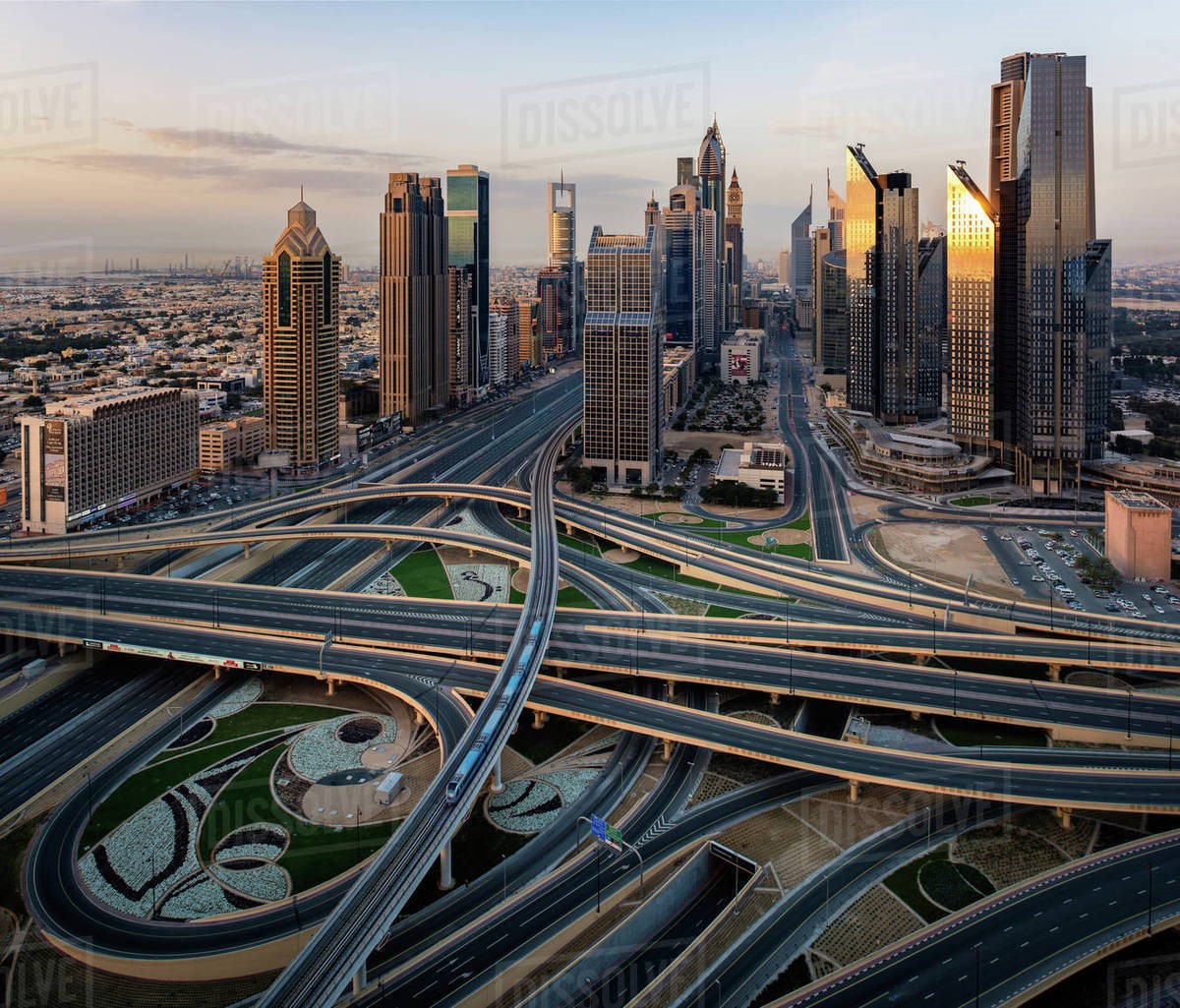
The United Arab Emirates has successfully established an advanced infrastructure of roads, bridges, tunnels, ports, and other transport projects within a short period, surrounded by high-level services, placing the UAE among the most modern and influential nations in the world.
Below, we shed light on the transport modes utilized in the UAE’s sports tourism industry to determine their characteristics and role in stimulating and developing sports tourism.
Land Transport
The land transport system consists of two main elements: the road and the vehicle. The road is a fundamental element in transport, perhaps even more so than the vehicle used upon it, as poor road conditions can hinder the use of certain transport vehicles requiring high road quality.
The road network in the UAE serves as the backbone of its commercial, economic, and tourism growth. Accessibility to the UAE is extremely smooth; it can be reached via land, sea, and air. For a long time, it played the role of a connecting link between East Africa, the Indian Subcontinent, the Gulf region, and the Arabian Peninsula, as traders utilized it as a major stopping point. This reflected on the revival and prosperity of its transit trade movement, particularly in the Emirate of Dubai, alongside other economic activities including sports tourism.
The UAE is connected by a network of highway roads featuring internationally agreed-upon specifications, linking it to all major cities in the Middle East. Some of these roads were built or developed along the same historic trade routes that once connected the UAE to the rest of the Middle East. These modern roads are characterized by capacity and ease of movement, particularly between the country and the Sultanate of Oman and the Kingdom of Saudi Arabia.
The country is linked by an internal road network boasting international standards among its cities. For instance, these roads connect the Emirate of Dubai to Sharjah and the Northern Emirates to the east, Abu Dhabi to Al Ain to the west, Dubai to Abu Dhabi to the west, and Sharjah to its eastern coast neighbor Fujairah. They also connect to its three cities—Khor Fakkan, Kalba, and Dibba Al-Hisn—and other coastal cities on the Arabian Gulf through a developed road network. Furthermore, Dubai is linked to the south with Al Ain (affiliated with Abu Dhabi) and with the Sultanate of Oman to the southeast.
A unified road network links all seven emirates, starting from Abu Dhabi and ending in the Emirate of Fujairah, followed by another network extending from Abu Dhabi to the end of the Emirate of Ras Al Khaimah. This confirms that the UAE is interconnected via a developed road network forming more than ten major highways spanning over a thousand kilometers, represented by Abu Dhabi–Dubai, Dubai–Sharjah, Sharjah–Ajman–Umm Al Quwain–Ras Al Khaimah, Abu Dhabi–Al Ain, Abu Dhabi–Dubai–Sharjah–Fujairah, Dubai–Al Ain, and other main roads linking the country’s major cities.
A striking development in the country’s transport network was the inauguration of the first phase of the Dubai Metro on September 9, 2009, at a total cost reaching 29 billion dirhams, alongside the announcement of the establishment of “Etihad Rail” with a capital of 1 billion dirhams. This unveiled a railway project costing between 25 and 30 billion dirhams with a length of 100 kilometers, connecting Al Ghuwaifat at the border point with Saudi Arabia in the west to the border point with Oman in the east. The railway built by Etihad Rail in the country will form part of a regional railway project linking Gulf Cooperation Council (GCC) countries, enhancing and facilitating passenger and transport movement among them. The “Etihad Train” will constitute part of the Gulf train linking the six GCC states at a cost of around 25 billion dollars.
The Department of Transport in Abu Dhabi formulated its Comprehensive Surface Transport Master Plan 2030 within the framework of the “Abu Dhabi 2030” strategy, upgrading transport infrastructure across all cities and suburbs of the emirate to rank among the globally advanced cities in transport infrastructure. The plan includes establishing long-term infrastructure for roads and multi-modal transport, represented by a safe, modern, and advanced transport network connecting Abu Dhabi to its surrounding areas and linking all parts of the emirate locally, regionally, and internationally. This supports the comprehensive renaissance witnessed by the emirate across all fields by facilitating the movement of individuals and groups across all transport means, including the metro, train, tram, and water transport.
The launch of the Dubai Metro on September 9, 2009, represented a significant and pivotal milestone in developing the public transport network in Dubai, making it the first Gulf city to utilize an integrated metro network. The Dubai Metro is the first driverless automated metro network in the Middle East, aiming to alleviate traffic congestion, reduce travel time via transport, and mitigate pollution resulting from conventional transit means. Upon completing its final phase, its length will reach 70 kilometers of lines and 47 stations (including ten underground stations) in addition to two lines under construction. The Dubai Metro crossed the threshold of three million passengers across ten stations via the Red Line from the launch of its first trips until November 9, 2009.
Air Transport
Air transport is among the newest, fastest, most advanced, and most widely used modern transport modes, capable of covering long distances and overcoming natural isolation regions, while offering exceptional comfort. Air transport represents one of the primary pillars and components of tourism movement; an attractive tourism environment in an isolated mountain community that is difficult to reach loses its resort appeal and tourism value. If such isolation poses a barrier to tourism movement, air transport becomes the optimal and sole means to overcome this obstacle.
When the country was established in 1971, there were only three small airports in Abu Dhabi, Dubai, and Sharjah. Today, it greets the world through seven international airports located in Abu Dhabi, Dubai, Sharjah, Ras Al Khaimah, Fujairah, and Al Ain. In the Emirate of Abu Dhabi, there are three international airports: Abu Dhabi International Airport, Al Ain International Airport, and Al Bateen Executive Airport, which is dedicated to receiving VIP state guests. The Abu Dhabi government allocated about 1 billion dirhams for airport development projects to meet the emirate’s growth needs and elevate them to modern standards in line with 21st-century metrics.
The Airports Council International (ACI) projected that passenger capacity across existing and new national airports would reach over 250 million passengers by 2020, capturing first place in the Middle East and North Africa in terms of passenger capacity. The country will also pump over 22 billion dollars into expansion and airport construction projects across various emirates after the number of travelers through national airports reached around 40 million passengers, serviced by approximately 285 airlines.
National airlines—Etihad Airways, Emirates, Air Arabia, flydubai, and Ras Al Khaimah Airways—have achieved successive qualitative leaps in the size of their modern wide-body aircraft fleets, the growing global travel destinations they reach, and the number of passengers utilizing them.
We can summarize the role played by various transport modes in tourism, domestically or internationally—especially air transport—as holding a pioneering role in tourism movement among global tourism regions, which naturally require long-distance travel frequently crossing water barriers or geographical obstacles impeding ease of movement.
This increase in international air transport movement in particular is the result of several factors, most notably: people are more inclined to travel by air; air travel is incomparably faster; and costs are generally lower. A decisive development for air transport was the creation of inclusive tour packages where travelers board chartered flights at prices substantially lower than standard scheduled services.
The UAE features eight international airports in Abu Dhabi, Dubai, Sharjah, Ras Al Khaimah, Fujairah, and Al Ain, while new international airports and major expansions are underway at Abu Dhabi and Dubai international airports. Investments in national airports over the next five years are expected to reach around 100 billion dirhams. ACI projected passenger capacity in existing and new international airports to exceed 250 million passengers by 2020, securing first place in the Middle East and North Africa in capacity.
Abu Dhabi Airports (ADAC) commenced execution in mid-2012 of the new Midfield Terminal Complex at Abu Dhabi International Airport, spanning 700,000 square meters at a cost of 10.8 billion dirhams. This quintuples the total airport area following the building’s opening, accommodating around 40 million passengers annually and raising the airport’s capacity to roughly 50 million passengers.
The Dubai government earmarked investments of about 30 billion dirhams until the end of 2020 to expand and develop airports—26 billion to develop Dubai International Airport and 4 billion for projects at Al Maktoum International Airport, which successfully attracted 40 air cargo companies establishing Dubai World Central (DWC) at the airport as their hub.
Maritime Transport
Along the UAE’s coastline, there are over 26 maritime ports, 15 of which constitute the country’s main maritime gateways. In recent years, the state has invested billions of dirhams to develop port infrastructure and establish new ports, most notably Khalifa Port within the new industrial zones in Mussafah, covering an area of 600 square kilometers at a cost of 5.5 billion dirhams.
Free zones offering numerous facilities and exemptions to attract investments and encourage investors to establish commercial, industrial, and utility projects supporting the national economy have been established in many national ports. One of the largest is the Jebel Ali Free Zone (“Jafza”), which attracted over 377 new companies in 2009, pushing the total number of companies in Jafza past 6,000.
The largest of these ports—Zayed Port in Abu Dhabi, Rashid Port and Jebel Ali in Dubai, Khalid Port and Khor Fakkan in Sharjah, Ajman Port, Umm Al Quwain Port, Fujairah Port, and Saqr Port in Ras Al Khaimah—contribute a prominent role in developing and prospering economic and commercial movement due to their strategic locations, proximity to global markets, and linking the country via Asia and Africa to numerous global continents.
DP World, officially established in September 2005 following the merger of Dubai Ports Authority and DP World Terminals, ranks among the largest global port operators, managing over 52 ports across 24 countries on five continents with a capacity of 50 million TEUs (twenty-foot equivalent units) annually.
Specialized cruise berths have recently been allocated in certain national ports, such as Rashid Port in Dubai, Khalid Port in Sharjah, and Zayed Port in Abu Dhabi.
Furthermore, on December 12, 2012, UAE President Sheikh Khalifa bin Zayed Al Nahyan inaugurated Khalifa Port in the Taweelah area of Abu Dhabi, which stands as one of the largest and most advanced ports in the Middle East and North Africa regarding available technology, area, and operational capacity. He stated: “The inauguration of this port, built according to the latest international standards, will be an important milestone in the modernization and development journey witnessed by our country through the efforts of its sons.”
His Highness emphasized providing necessary support to the national maritime transport sector, especially Khalifa Port, to complete its construction phases so it can stand as one of the most important commercial ports in the region, across the Middle East, and as a link between global economic regions by capitalizing on its location and the UAE’s strategic position. He stated: “The opening of this massive edifice reinforces our directions toward completing the vision of Abu Dhabi 2030 with confident steps, contributing to sustaining the high-paced growth witnessed by the UAE to meet the ambitions of national youth in building a vital economic base.”