



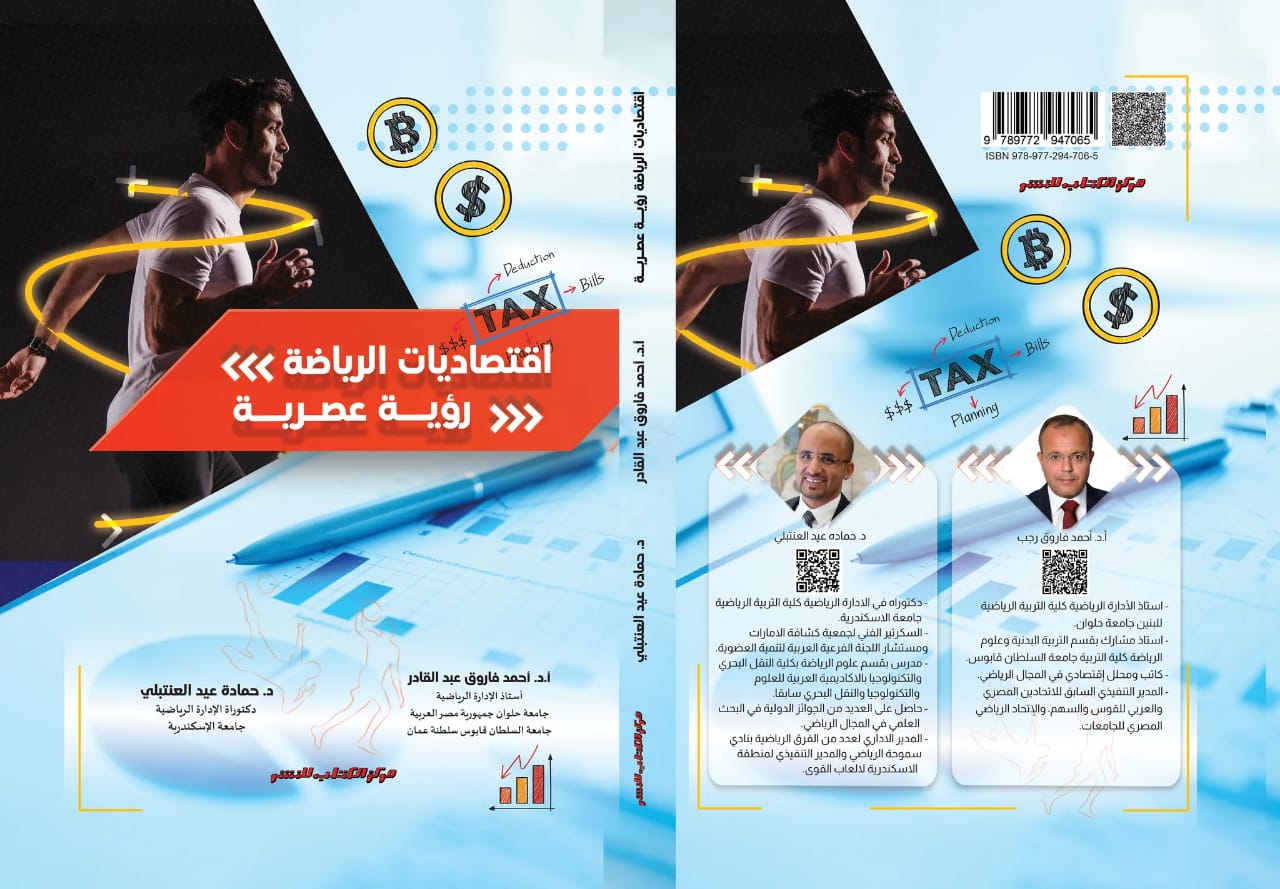
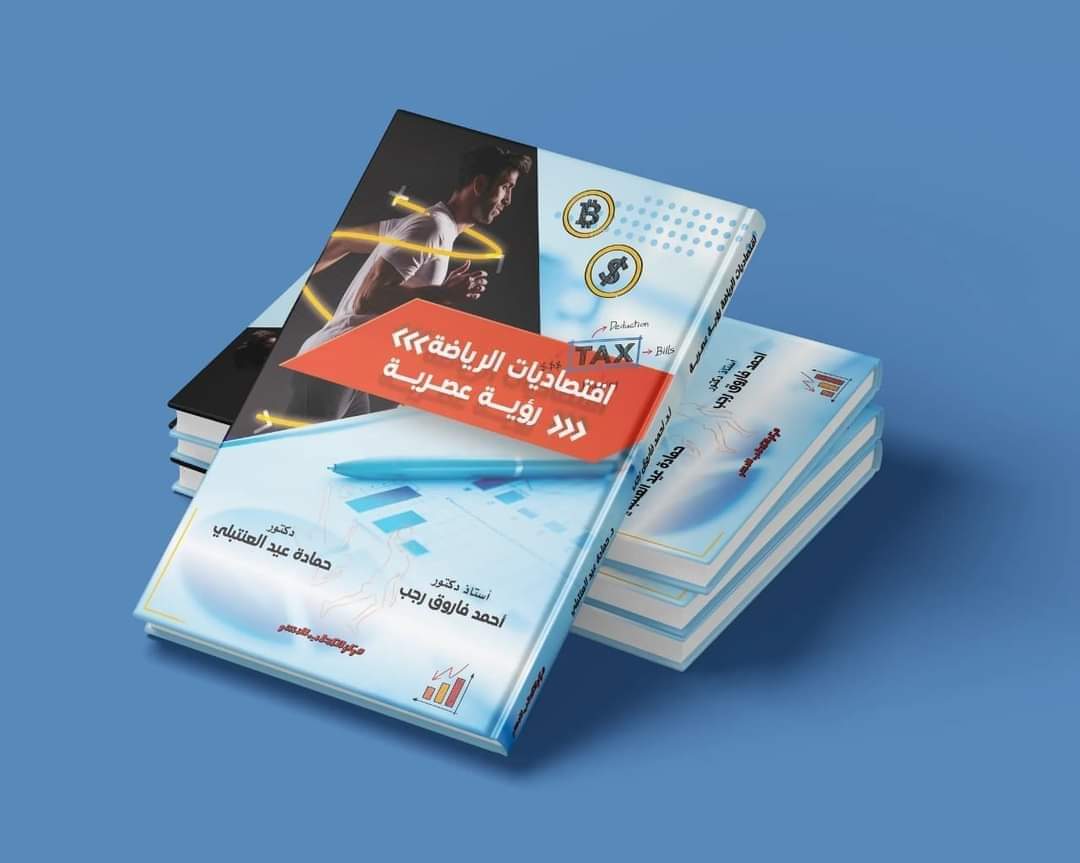
When I began working in the field of sports management and administration, I was convinced—as many of us are—that sport is first and foremost a social, educational, and human activity. Over the years, however, one truth became increasingly impossible to ignore: sport cannot survive, grow, or achieve its societal mission without a sound economic foundation. This realization is what ultimately led me to write The New Economics of Sport.
This book did not emerge suddenly, nor was it written merely to fulfill an academic requirement. It is the product of years of teaching, research, institutional engagement, and continuous observation of how sport functions—or sometimes fails to function—within our economic realities. Writing it was, in many ways, a personal and professional responsibility.
Throughout my academic journey and professional practice, I kept encountering the same questions, posed in different forms by students, administrators, and policymakers:
Why do many sports institutions struggle financially despite their popularity?
Why do large investments in sport sometimes produce limited technical or social outcomes?
Why does sport flourish as an industry in some countries while remaining financially fragile in others?
These questions were not theoretical. They reflected real challenges facing clubs, federations, ministries, and even athletes themselves. I realized that the problem was not a lack of passion or talent, but rather a limited economic understanding of sport as a system.
Sport had grown faster than the frameworks used to manage it.
My work at universities in Egypt and Oman placed me in daily contact with future sports administrators, educators, and researchers. In lecture halls and postgraduate discussions, I noticed a clear gap between classical economic theory and its application within sport. Students were eager to understand budgets, investments, sponsorships, broadcasting rights, and the economics of major events—but available references, particularly in our regional context, were limited or fragmented.
At the same time, my engagement with sports institutions revealed similar challenges. Many decisions were driven by urgency rather than strategy, by tradition rather than data, and by short-term survival rather than sustainability.
At that point, I knew that writing The New Economics of Sport was no longer optional. It became necessary.

This book is an attempt to present sport as a modern economic activity without stripping it of its human and social essence. I did not aim to reduce sport to profit and loss statements. Rather, I sought to explain how economic thinking can protect sport, strengthen it, and allow it to serve society more effectively.
In the book, I explore:
The economic structure of sports organizations
The relationship between sport and national economies
Resource allocation and efficiency in sports institutions
Investment, funding, and budgeting in sport
The economics of hosting major tournaments and events
The role of legislation and governance in shaping sports economics
Employment, human capital, and sustainability in the sports sector
Each topic was written with one guiding principle in mind: economic awareness is not the enemy of sporting values—it is their safeguard.
One of the greatest challenges I faced while writing this book was maintaining balance. On one hand, I wanted the work to be academically rigorous, grounded in economic theory and supported by analytical frameworks. On the other hand, I was determined that it should remain accessible and relevant to practitioners in the field.
Sport does not operate in laboratories; it operates in stadiums, clubs, communities, and national systems. Therefore, I constantly asked myself while writing:
Can this concept help a sports administrator make a better decision?
Can it help a policymaker avoid repeating costly mistakes?
Can it help a student see sport as a viable professional future?
If the answer was no, I rewrote.
The New Economics of Sport is directed at multiple audiences, each of whom plays a role in shaping the future of sport.
For sports institutions, the book offers tools for strategic planning, financial sustainability, and informed investment. It encourages clubs and federations to move beyond dependence on state funding and toward diversified, responsible revenue models.
For governments and policymakers, it presents sport as an economic sector capable of contributing to employment, tourism, urban development, and national income—if managed within clear legal and economic frameworks.
For the private sector, it clarifies how sport can be a legitimate and strategic investment opportunity rather than a risky or symbolic endeavor.
And for students and academics, the book provides a foundation for understanding sport through an economic lens, opening doors for research, innovation, and professional growth.
While institutions are central to sports economics, people remain at the heart of this book. Athletes, coaches, administrators, students, and fans are all affected—directly or indirectly—by economic decisions.
Poor economic planning can shorten athletic careers, limit access to facilities, reduce opportunities for youth, and waste public resources. Sound economic thinking, by contrast, can create jobs, improve performance environments, and ensure continuity across generations.
If this book helps even a small number of readers reconsider how economic decisions shape human outcomes in sport, then it has achieved something meaningful.
One of my strongest motivations in writing this book was the need for context-aware scholarship. Our region has unique demographic, cultural, and institutional characteristics. Importing economic models without adaptation often leads to failure.
I wanted this book to speak from within our reality—acknowledging global experiences while remaining grounded in local challenges. Sport in the Arab world has enormous potential, but unlocking it requires honest assessment and strategic economic thinking.
I do not consider The New Economics of Sport a conclusion. It is a starting point—a platform for dialogue, research, and reform. The economics of sport will continue to evolve as technology, media, and global markets change. Our thinking must evolve with it.
Writing this book was a demanding journey, but also a deeply fulfilling one. It allowed me to bring together years of teaching, research, and observation into a single work driven by conviction rather than obligation.
I hope this book finds its way into classrooms, offices, institutions, and discussions where decisions about sport’s future are made. And I hope it reminds us all that when sport is managed wisely, economically and ethically, its impact reaches far beyond the field of play.
