



I wrote Values Between Sport and Professionalism because I could no longer ignore a painful contradiction: sport was created to elevate human character, yet modern professionalism has often pulled it toward practices that weaken character and normalize moral compromise. This book—co-authored with Dr. Abdul Latif bin Ibrahim Bukhari—was my attempt to treat this contradiction seriously, academically, and humanely, and to ring an alarm bell for everyone who still believes sport should remain a school of ethics, not merely a marketplace.

Values are not a “soft topic,” and they are not an accessory to life; they are the reference frame that governs human behavior, supports people in crises, and preserves social cohesion and collective purpose. When values shake, individuals feel lost—and communities start to fragment. That is true in society at large, and it is also true inside sport.
For a long time, sport carried a moral promise: it offered wholesome recreation, ethical education, health, and the planting of good character through fair competition. Even the early Olympic idea, as we discussed, symbolized peace and the rejection of violence, allowing conflicting parties to meet under sport in safety. But then a hard reality became impossible to deny: once money becomes the dominant goal, it can establish moral corruption as a “normal” value system. When that happened, the “values of sport” began to lose ground to the “values of money”.
I saw this shift not only in headlines or distant stories, but in daily conversations and lived experiences around stadiums, training centers, and competitions. A new language entered sport: contracts, agents, brokers, marketing, advertising, and enormous wealth—often for players, coaches, and intermediaries alike. Professionalism, in itself, is not evil; it is a reality and can be beneficial. Yet it creates a harsh environment where temptation becomes constant, and where shortcuts can look more rewarding than discipline.
This is where the internal question became urgent for me: if sport is one of our strongest tools for building youth, what happens when the field itself becomes a classroom for deception?
In the book’s introduction, we used an image that is very close to my heart: the researcher’s role resembles the surgeon who opens deep wounds to reach the real causes, treat them, and help the wound heal so it does not return. That is exactly how this work felt while writing it. It was not comfortable to document behaviors that many prefer to hide or justify. But ignoring them would be a betrayal of academic honesty—and, more importantly, a betrayal of the educational mission of sport.
The emotional weight came from one central idea: many people love sport sincerely. They train, sacrifice, and compete with pure intentions. So when dishonest behaviors spread, they do not only harm “results”; they harm people—young athletes learning what success requires, supporters losing trust, and entire institutions forced to manage scandals instead of development.
What sustained me through writing was the belief that values can be rebuilt. The Qur’anic verse placed at the beginning of the book speaks to this meaning: real change begins from within the self. So the book does not merely complain about the present—it calls for internal reform, personal responsibility, and institutional action.
This book was designed in four chapters, each one serving a specific purpose in building an argument, not just providing information. The path begins with defining values and ends by confronting real-life distortions of values inside professional sport.
Here is the intellectual journey of the book, in the way it was intended:
Chapter One: An entry to values. It grounds the concept of values linguistically, religiously, philosophically, economically, politically, and educationally, and discusses sources of values, their characteristics, classifications, and how values are learned and connected to education and moral values.
Chapter Two: Sport and values. It discusses sport, its characteristics, the ethical charter of sport, and the values and rules associated with sporting practice.
Chapter Three: The values of professionalism. It addresses sport and professionalism, the distinction between amateurism and professionalism, the concept, characteristics, and foundations of professionalism, and the negative values that can dominate under professional pressures.
Chapter Four: Models of values deviation under professionalism. It presents visible negative manifestations in stadiums—intended as signals for researchers and decision-makers to study them scientifically and propose solutions.
This structure was important because talking about moral decline without defining values is shallow, and talking about values without confronting real behaviors is naïve. The goal was to connect the theory to the field.
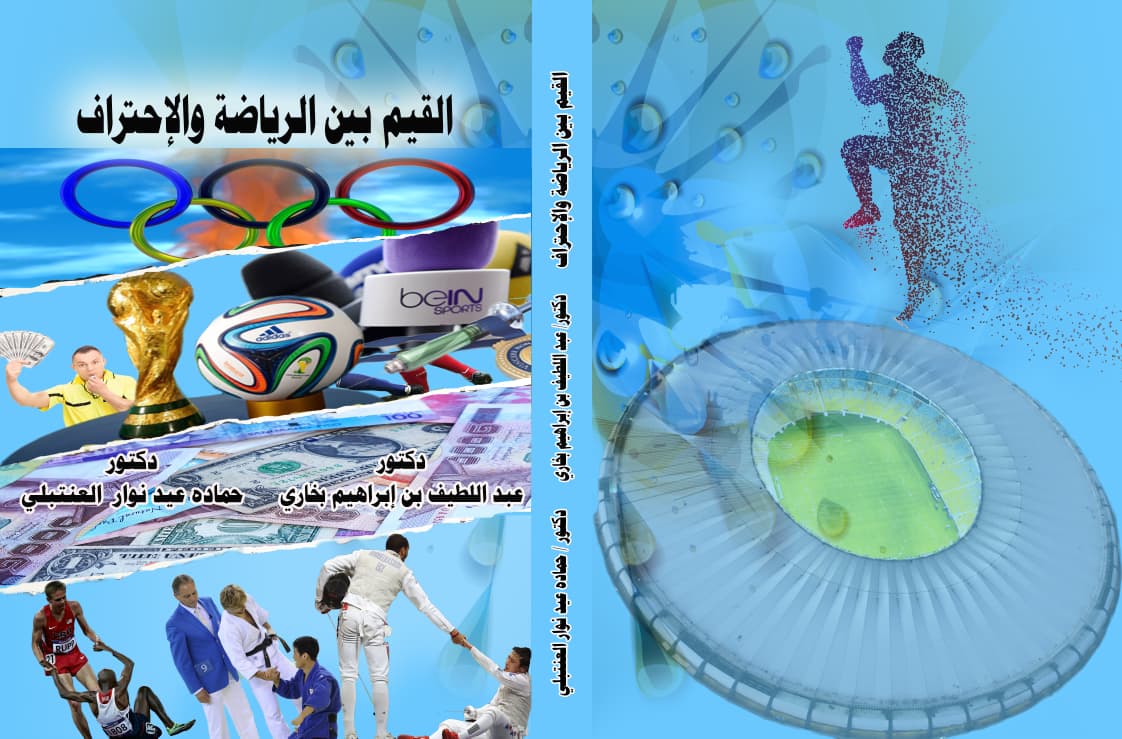
One of the strongest motivations for writing was watching certain behaviors become almost “expected” in modern competition. As we described, when money dominates, new accompanying concepts appear: lying, faking injury, cheating, deception, the idea that “the end justifies the means,” and using doping as a shortcut to reach the podium regardless of consequences. We even referenced a shocking research scenario presented to athletes: if a substance would guarantee winning but might cost life afterward, many still accepted. That is not simply a “sports issue”—it is a moral crisis.
This is why the book is not directed only to athletes. It is directed to:
Sports institutions and decision-makers, because systems can reward wrong behavior even when individuals know it is wrong.
Coaches and administrators, because daily culture is formed by what leaders tolerate and what they punish.
Students and researchers, because the field needs evidence-based solutions and not only emotional reactions.
Parents and educators, because sport education is an extension of broader value education, and the relationship between values and education is mutual—without values, education becomes empty; without education, values cannot be planted effectively.
The book was written with a clear hope: that it would function as a “warning siren” so that institutions begin practical steps to preserve the noble values of sport and keep it as a means to refine the self and build sound character in youth. On an industry level, the book speaks to the reality that sport has become an investment field and an economic sector, but it insists that economic growth must not come at the cost of moral collapse.
On a human level, the impact I seek is even more direct:
Helping young athletes understand that success without integrity is not true success.
Giving coaches and sports leaders language and frameworks to discuss moral problems without denial or simplification.
Encouraging researchers to study negative phenomena and propose workable interventions that fit our cultural context.
This book is dedicated to everyone seeking the elevation of sports values, and to everyone who believes diseases are in bodies—not in values and ethics. I do not claim perfection or that this work reaches the final word; the introduction itself admits that perfection belongs to God, and that this is an attempt to contribute to improving sport and confronting harmful negative phenomena.
But I do claim one thing with confidence: sport deserves to remain a moral language. If professionalism becomes the excuse for corruption, then it is not professionalism—it is a distortion. And if we want sport to build nations, not merely entertain crowds, then values must return to the center of our sporting life—not as decoration, but as foundation.
