Measuring the Impact of Sport’s Contribution to Community Development
Written by Dr. Hamada Alantably
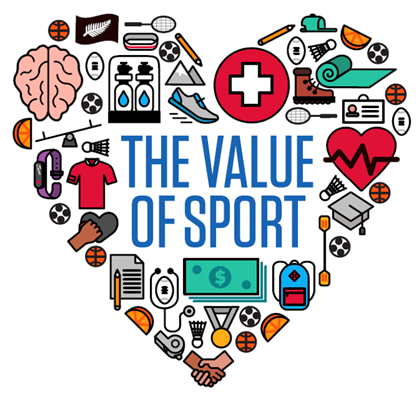
Traditionally, society’s perspective on sports over the decades has been confined to achievements in various international championships, the level of Egypt’s participation in the Olympic Games and whether that representation is honorable, and the outcomes achieved by national teams across different sports at the African, Arab, and international levels. Topping this landscape is whatever the football team achieves, whether at the club or national team level. This points to the importance of adopting a different vision or viewpoint in evaluating the impact of sports on Egyptian society and the role it is expected to fulfill. This is achieved by embracing foundational approaches or primary goals that sports strive to attain: physical health, mental health, individual development, social and community development, and economic development. Doing so reinforces the value of sports and their impact on building Egyptian society and the nature of its social structure within the framework of the economic and health status of all segments of the Egyptian populace, highlighting the value of sports in building the future for various social groups and classes.
The impact we seek to measure here is the realization of material and economic development. This is accomplished by gathering data on the number of participants in sports activities across various neighborhoods, regions, and governorates. To achieve mental development, individual development, and social and community development, further work will be required over the coming years to understand the exact impact that sports and physical activity can have on overall outcomes. This demands periodic studies and opinion polls regarding participation rates and the preferences of individuals across all levels participating in sports activity. Below, we will touch upon a set of indicators that can be relied upon to measure the impact of sports’ contribution to community development:
First: Improving Health Status
It is universally acknowledged that practicing sports has an effective impact on improving individuals’ health status. People who engage in physical activity are less prone to heart disease, high blood pressure, diabetes, and obesity—a fact confirmed by all scientific studies in this direction. Furthermore, the American Journal of Preventive Medicine confirmed that regular sports participation leads to an increase in life expectancy by about five years. This is achieved by broadening the base of sports participation among various segments of society and across all age groups, starting from childhood all the way to old age.
Second: Improving Mental Health
Sports have powerful effects on the psychological and mental state of those who practice them, as well as spectators and sports volunteers. Engaging in sports reflects positively on improving mood and combating anxiety, depression, and stress resulting from daily life pressures, due to the brain releasing various hormones that enhance and improve an individual’s psychological state. This positively reflects on achievement and the capacity for creativity at work, establishing the motto: “A sporty, healthy, and productive society.” The expected outcomes of this objective include improving the general psychological state within Egyptian society.
Third: Individual Development
There is no doubt that sports have effective impacts in achieving high levels of individual development through the integrated building of the body and raising fitness levels, or at the level of champions who achieve success and distinction that often surpasses accomplishments achieved at educational and social levels. This points to the importance of building a generation that believes in the importance of sports and its value in achieving future goals. It also helps individuals shed bad habits or destructive thoughts that might affect their future, assists them in excelling and achieving the highest levels of academic distinction, and contributes to raising the economic standard of individuals who practice sports and work within the field.
Fourth: Social and Community Development
In addition to developing individuals, sports can help build stronger communities by bringing together people—often from diverse backgrounds—to make them feel better about where they live, improving community ties and cohesion, and building social capital. We know that people who volunteer in sports, for example, are more likely to feel a sense of belonging to their local area, and people who participate in sports are more likely to enjoy stronger social relationships with others. There are many dimensions to measuring social capital, but the best starting point for the type of impact we want sports to focus on is the level of social trust within communities.
Fifth: Economic Growth
In the past, the economic value of sports was viewed separately from the other public benefits sports could achieve. However, what sports have accomplished for many countries that adopted an investment-oriented approach to sports indicates the necessity of grounding the role of sports in Egypt’s Gross Domestic Product (GDP). The economic impact of sports, how it creates jobs, encourages growth, and drives exports, requires an orientation that motivates organizations to look not only at how they contribute to the health or well-being of the nation, but also to the economy, on both national and local levels.
Each of these indicators will be addressed in detail through a set of fundamental determinants and evaluation criteria in a series of articles we will cover in the coming period, God willing.
Accept my sincere regards and appreciation,
By Dr. Hamada Alantably