The Return of Life to Football Stadiums: Between a Rock and a Hard Place
Written by Dr. Hamada Al-Antably
Undoubtedly, football is the number one popular sport in the majority of the world’s countries, making it the focus of global attention as an indicator of life returning to normal after the coronavirus pandemic. The pandemic struck the entire world, halting the wheels of life, stopping all manifestations of modern life and global economies, and even suspending all international gatherings—most notably the postponement of the Olympic Games. Just as football has the power to attract the attention of the world and various media outlets, it consequently has the power to attract politicians and world leaders to use it as a tool to achieve numerous political goals, with examples being long and numerous throughout history. It also possesses an uncanny ability to attract fame-seekers, imposters, and others too numerous to mention, as the list goes on.
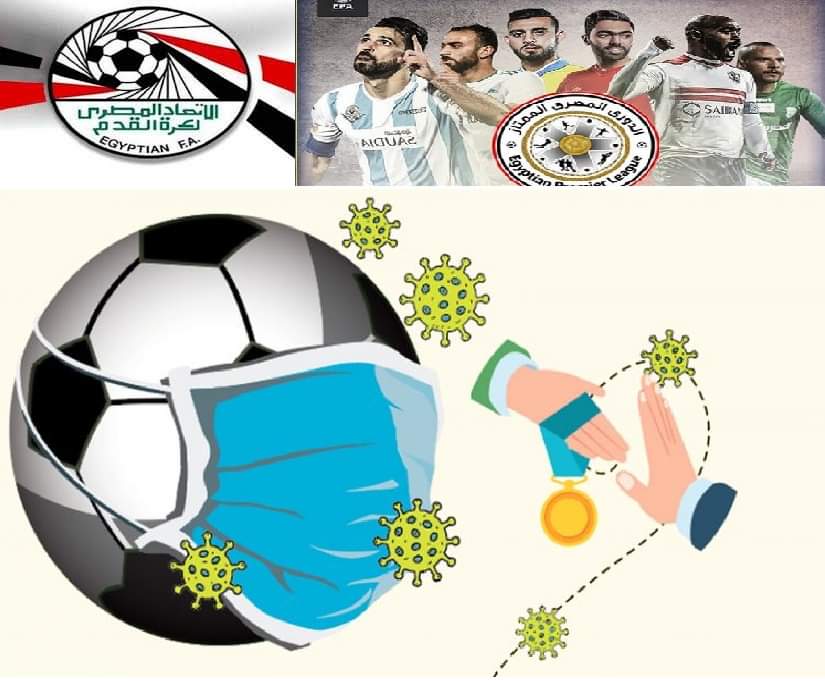
Let us return here to the desire for life to return to normal, or a “new normal” life after corona—a life whose primary currency is precautionary measures ensuring the safety of all parties from the risk of the spread and outbreak of the coronavirus. This virus has become a threat to humanity, especially given the absence of a real treatment or vaccine to prevent exposure to it. This has led governments to set a group of conditions and precautionary measures as a basic requirement for the return of any sports, economic, or other activity. This naturally applies to football, as was observed with the return of the German Bundesliga, the announcement of the return dates for the Spanish and English leagues, and other international leagues.
As for us in Egypt, we are once again reinventing the wheel, as is our habit. The Egyptian football arena is full of self-interested parties: some benefit from suspended activity because it is a season for spreading gossip and media wars—a war they excel at and profit well from; others fear losing the championship or even relegation, and thus strive to prevent the resumption of the tournament; while others reduce the entire issue to whether Al Ahly will be crowned champions or not if the league is cancelled.
Many have ignored or overlooked the true value and the goal that should be focused on. The Egyptian League supposedly has a marketing value and concluded contracts, and its cancellation would seriously damage that marketing value, as well as entail huge financial losses for all parties. Furthermore, these clubs have contractual obligations with players and technical staff and are required to pay the value of those contracts. This is what prompted international leagues to rush to bring life back to stadiums, because football is no longer just a recreational game or a simple match where one team wins and the other loses; it is now an industry and an investment venture.
Moreover, if the primary purpose of the calls for cancellation is concern for public health and the inability to meet the requirements of precautionary measures, we do not know when the virus will end or when a vaccine will become available. Are we going to suspend football activity in Egypt until then? On the other hand, we have Egyptian teams at the club and national levels competing in continental tournaments that are in their final stages, and failing to resume the league will certainly affect their chances of competing.
I believe it is better to seek solutions for clubs unable to meet precautionary measures—which is the pretext used by advocates of cancellation—such as having sponsor companies allocate a portion of their payments to clubs to provide the requirements and precautionary measures to secure the participants in the game. I repeat that there must be genuine management by those responsible for running the sport, characterized by firmness and decisiveness in protecting the system as a whole. There should be professional administrations that meet and discuss the affairs, future, and interests of Egyptian football. The reason behind these recurring crises is the presence of amateurs managing a professional system; every single party in the game is professional except for the management, which is treated like an abandoned child rather than the entity responsible for the success or failure of the system.
It is also crucial to establish a professional league association, as is the case in all countries around the world, rather than a federation looking out for its own personal interests, resulting in moving from one crisis to another as if it were crisis management rather than the management of a football system. Straighten yourselves out, may God have mercy on you, if you want Egyptian football to have status and a future, instead of crying over spilled milk all the time and engaging in hollow media wars.
To be continued.
By Dr. Hamada Al-Antably