



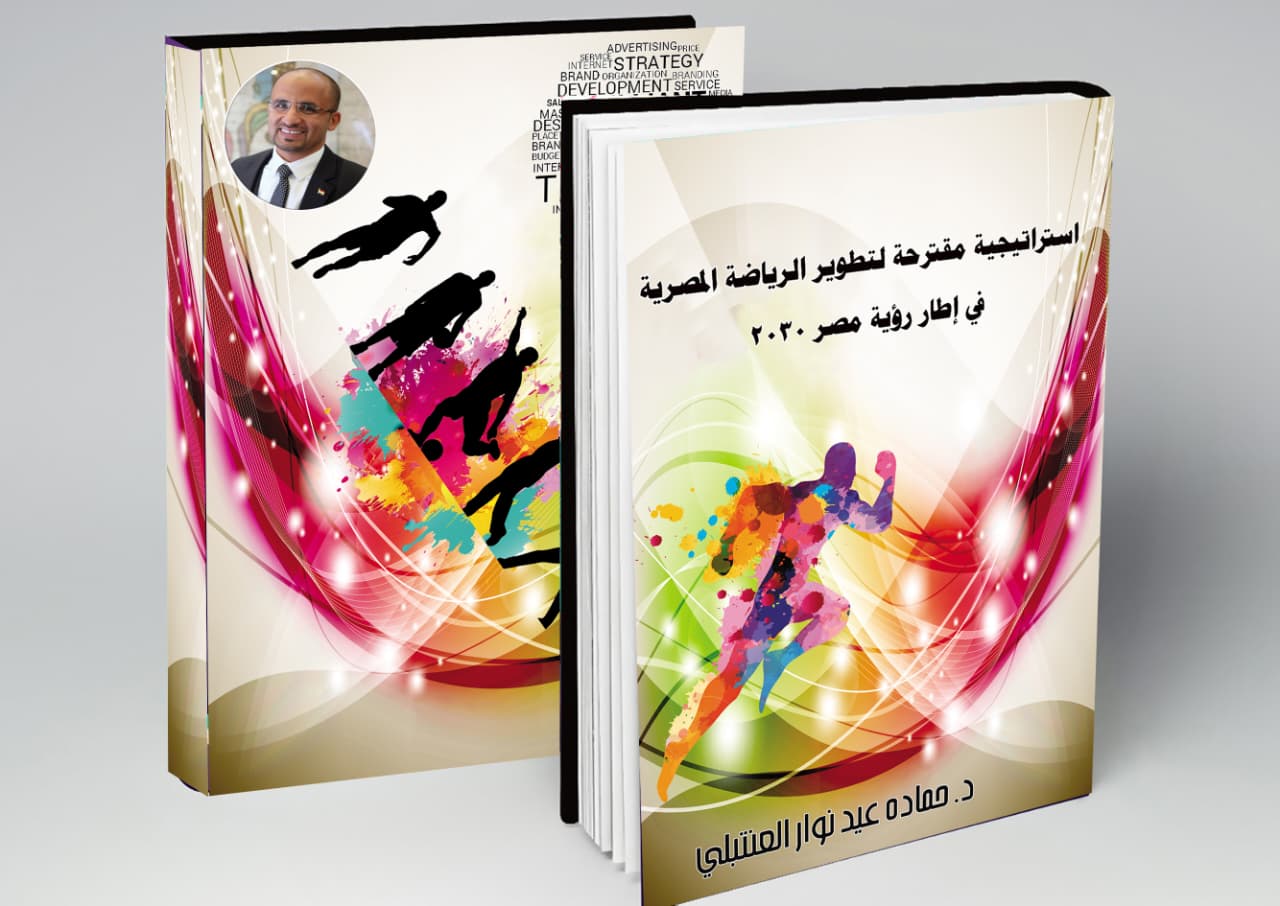
Egypt’s Vision 2030 is often discussed in terms of infrastructure, economy, education, and public services—but for me, sport has always been an essential part of that national picture, not a side topic. Sport influences public health, youth development, national identity, international presence, employment, investment, and even tourism. That is why I wrote my scientific paper proposing a strategy to develop Egyptian sport in light of Egypt Vision 2030: because I believe sport can and should be planned with the same seriousness we apply to other national sectors.
In this blog article, I am not writing as a distant observer. I am writing as the researcher who carried the questions, struggled with the details, and tried to transform a broad national vision into a practical strategic path. I will highlight the paper’s overall direction, share my personal journey writing it, and explain what I believe its impact can be on institutions, industries, and—most importantly—people.
When a country sets a vision like 2030, it is essentially declaring: “We want measurable progress, not scattered efforts.” The sports sector cannot remain dependent on fragmented initiatives, seasonal enthusiasm, or short-term administrative cycles. Sport needs long-range planning, clear priorities, measurable indicators, and defined responsibilities.
While working on this paper, I kept returning to a basic tension: Egypt has a large population, a strong youth base, and a rich sports history—yet development outcomes are not always proportional to that potential. This is not a criticism of individuals; it is a recognition that systems require strategy. Without strategy, resources can be spent without building sustainability. With strategy, even limited resources can create cumulative impact.
The paper’s core intention was to propose a structured approach—one that aligns sports development with Egypt Vision 2030 and transforms the vision into programs, timelines, and implementation mechanisms rather than leaving it as a slogan.
This research demanded two different kinds of thinking. First, national-level thinking: How does sport contribute to sustainable development, and what does “success” look like when the goal is a healthier, more productive society by 2030? Second, operational thinking: What projects, policies, and organizational reforms are actually needed year by year to reach that future?
One of the challenges I faced was that strategy work is always multidisciplinary. A sports strategy is not only “training athletes” or “building stadiums.” It touches governance, financing, anti-doping structures, investment models (including approaches like BOT), talent pathways, community participation, and international standards. As I moved through the research, I found myself continuously balancing ambition with realism: the strategy had to be inspiring enough to mobilize decision-makers, but practical enough to be implemented across years and changing conditions.
The document includes structured sections that reflect this approach, including a detailed framework tied to the 2030 horizon and a timeline that spans multiple years toward 2030. It also draws on international references and experiences in sports strategy and facilities investment planning, because national strategy becomes stronger when it learns from tested models rather than reinventing everything from zero.
Although the paper contains extensive detail, its direction can be understood through a few key ideas that shaped the proposed strategy:
Sport should be positioned as a contributor to national development goals under Egypt Vision 2030, rather than treated as a secondary recreational sector.
Development must be planned across years toward 2030, with clear phases and a time-based roadmap, rather than relying on isolated short-term projects.
Governance and institutional readiness matter as much as facilities and competitions; without strong systems, outcomes remain unstable.
Health, integrity, and credibility are part of sports development. The paper references structures related to anti-doping (such as WADA and EGY NADO), reflecting that modern sport must meet ethical and international compliance requirements, not only performance requirements.
Financing and investment mechanisms are critical, including structured approaches that can support sustainability and reduce dependence on traditional funding alone (the paper references investment approaches such as BOT within the strategic context).
In other words, the strategy is not simply about “more sport.” It is about better sport governance, better sport economics, and better sport impact on society.
One of the most important questions I asked myself while writing was: Who exactly benefits from “sports development”? If the answer is only “elite athletes,” then the strategy would be incomplete. The proposed direction is designed to benefit multiple groups:
Youth and families, because sport participation supports health, discipline, social belonging, and positive identity formation—especially when programs are accessible and well-managed.
Sports institutions (clubs, federations, ministries, committees), because a clear strategy provides alignment and reduces contradictions between efforts, while supporting more professional governance and accountability.
Education systems and universities, because sport development is tightly linked to youth pipelines, talent discovery, and long-term performance outcomes.
The sports economy, including sponsors, investors, facility operators, sports services, and event organizers—because strategy creates a clearer investment climate and more predictable project frameworks.
Public health and community wellbeing, because a nation that increases participation in physical activity reduces long-term health burdens and improves quality of life.
For me, this is the real meaning of “Vision 2030 in sport”: sport becomes a structured national tool that improves daily life—not only a field for occasional celebration.
A serious national sports strategy affects industries in concrete ways. When sport is treated as a planned sector, it stimulates:
Facility development and operation (construction, maintenance, management services), especially when projects are implemented through structured investment models and long-term planning.
Sports events, media production, broadcasting services, and tourism opportunities, particularly when the strategy includes a timeline of activities and performance targets over multiple years.
Sports medicine, rehabilitation, fitness, coaching education, and professional training services—because participation growth requires qualified human resources and ethical standards.
Branding, marketing, and sponsorship markets, because strategic clarity helps sponsors understand what they are investing in and what long-term value can be expected.
This is why I consider the sports strategy not just a “sport plan,” but part of national economic modernization.
A strategy can easily become a document that sits on a shelf. While writing, I tried to constantly bring the 2030 goal down to the level of lived reality.
2030, in practical terms, means a student who finds a safe sports space in school and grows into a healthy adult. It means a talented athlete who gets a clear development pathway rather than relying on coincidence. It means a coach who receives professional education and works in a system that respects planning. It means a young professional who finds a job in sports services because sport has become a real economy. It also means a fan who sees sport institutions operating with transparency and integrity.
This is why the paper does not treat sport as entertainment alone. It treats it as a structured national investment in people.
I am publishing this article on my personal blog because I believe strategic thinking in sport should not remain limited to academic circles. A national strategy only succeeds when it becomes a shared language—understood by decision-makers, institutions, professionals, and the public.
My hope is that this proposed strategy contributes to dialogue and action: aligning institutions, encouraging measurable planning, and making sports development part of Egypt’s national transformation toward 2030—not as an optional addition, but as a meaningful pillar of sustainable development.
