Behavioral Economics and the Coronavirus
Written by: Dr. Hamada Al-Antably
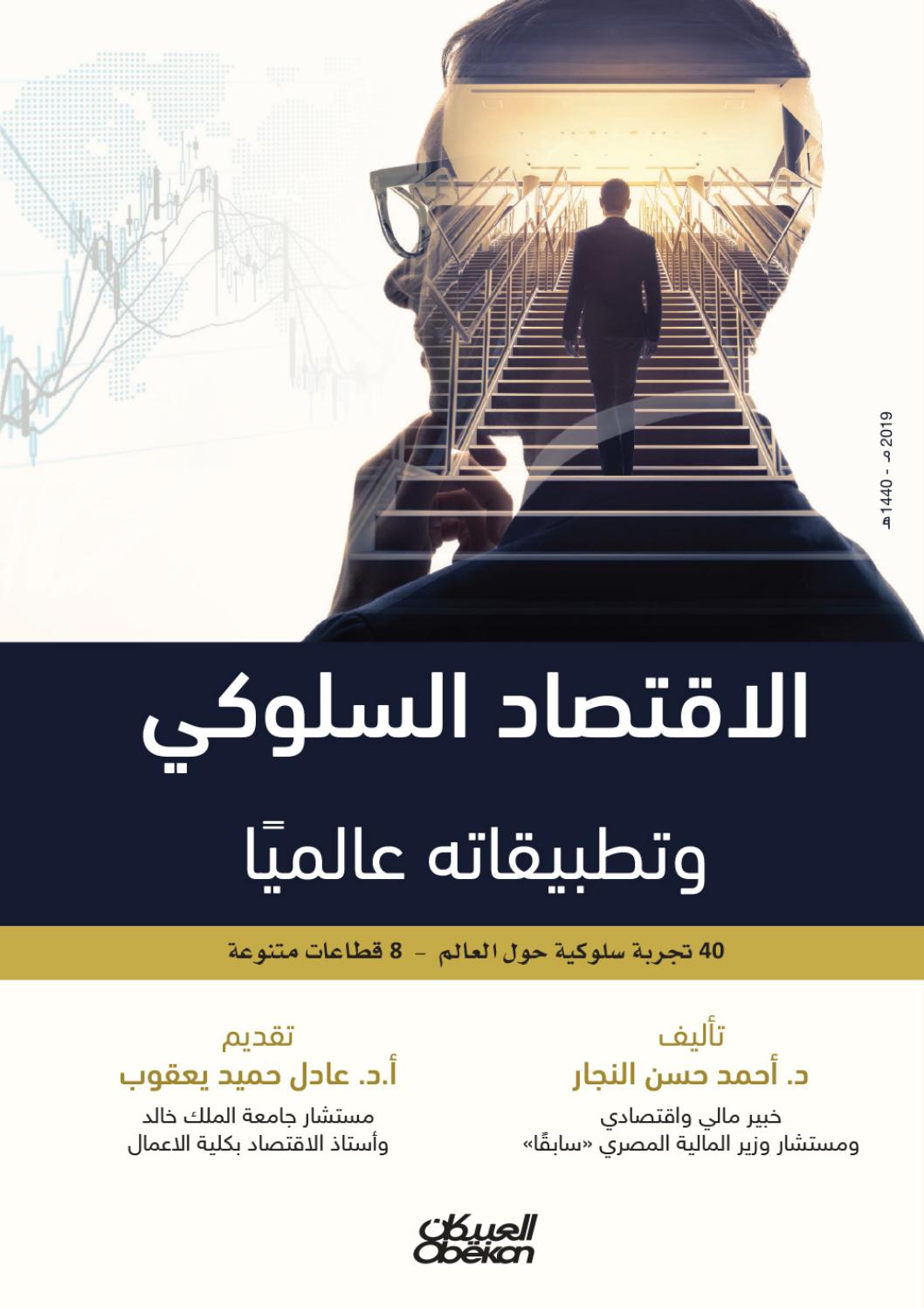
Today, while reading a book on behavioral economics—one of the sciences relied upon by modern economies to guide customers’ purchasing behaviors—I paused at a section where the book began by stating that individuals’ decisions in purchasing operations are not governed by the rational decisions upon which traditional economics relies. It gave examples of this: individuals trending toward buying cigarettes and fast food, even though the former destroys health, causes cancer, and leads to death—with warning messages to that effect printed on their packaging—and the latter leads to obesity, which is equally deadly, alongside numerous messages regarding the calorie content contained in those meals; yet, young people still rush to purchase them. Instead, purchasing decisions rely on behavioral orientation, beliefs, and prevailing ideas, which many producers and marketers depend on to guide consumers into buying one product over another.
The book further went on to suggest that there are two types of consumers: “Econs” and “Humans.” It described Econs as relying on rational decisions based on logical thinking and making sound choices, while the second type, Humans, make decisions emotionally and are thus prone to making errors in many of their choices, which are frequently predictable.
This prompted me to try to connect this science—which is based on the behavioral model and the ability to influence it—with how citizens in countries all over the world, especially Egypt, dealt with the Coronavirus (COVID-19) pandemic. The only remedy for this pandemic, up to that point, lay in social or physical distancing, and in everyone staying at home to protect themselves, their families, and their society. Despite all the warnings issued by governments against being in gatherings or failing to follow protection and prevention measures against infection, people still went to markets and gathered to eat communal breakfast meals as if they were defying governments. In reality, they were defying themselves.
I noticed that this is the best example of behavioral economics: behaviors are not linked to rational ideas about right and wrong, or about what is beneficial and what is harmful; rather, they are largely tied to their emotions, even if it might result in their death. In our folk proverbs, there is a saying that goes: “The cat loves nothing except its own fight”—a prime example reflecting our reality. People head toward confronting traditional “paternalistic” tools, such as fines, subsidies, or lockdowns, because they consider them restrictive, and the human soul rejects restriction.
It is worth noting that many countries currently rely on establishing behavioral insights units to link them to public state policies. In 2010, under the government of David Cameron [Note: text mentions David Macron as a blend of David Cameron and Emmanuel Macron], the United Kingdom established the first behavioral insights unit, followed by other countries including the United States, Australia, Canada, Netherlands, Denmark, Norway, and others. In Asia, countries like India, Indonesia, Peru, and Singapore worked on discovering applications of behavioral insights in their policies and programs. The examples are numerous at the level of international institutions such as the World Bank and the United Nations, and in the Arab world: Qatar, Lebanon, and Kuwait in late 2018.
Consequently, countries of the world—specifically our Arab nations—must rely on behavioral economics and its applications represented in behavioral visions and behavioral insights to influence citizens’ behaviors in facing the Coronavirus pandemic, because traditional methods relying on incentives and intimidation are no longer yielding any benefit. And God is the grantor of the path’s intent.
By Dr. Hamada Al-Antably