


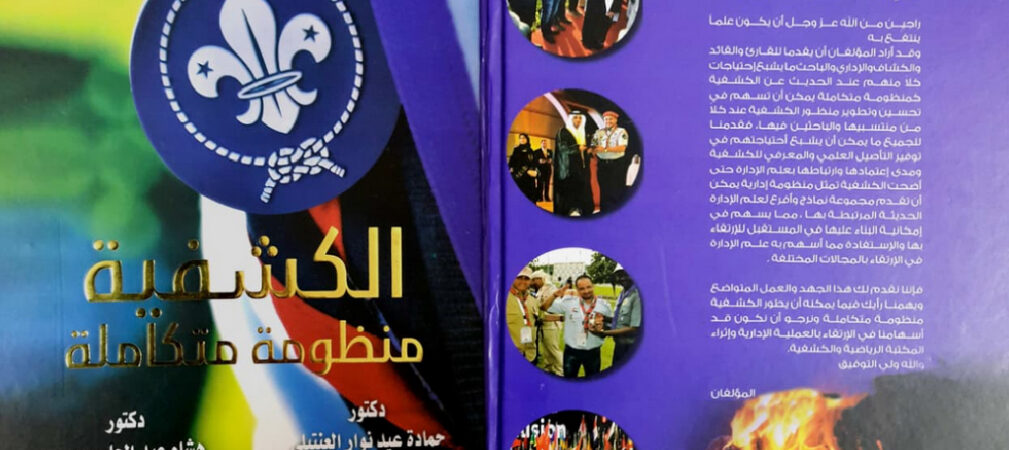
The Scouting movement is one of the most venerable voluntary educational movements in the world; however, it often faces challenges in how it is read and understood within societies. Some reduce it to temporary outdoor camps and uniform attires, while others restrict it to a narrow framework limited to traditional rituals, slogans, and celebrations. Hence, an urgent need arose to author the first volume of this encyclopedic project, titled “Scouting… An Integrated Administrative System,” published in 2013 in collaboration with Dr. Hisham Abdel Halim Mahmoud. The purpose of this work was not merely to release another book to sit on library shelves, but rather to respond directly to a pressing field need experienced by leaders, scouts, administrators, researchers, and beginners who constantly ask: Why do we do what we do, and how can we do it in a scientifically superior way?
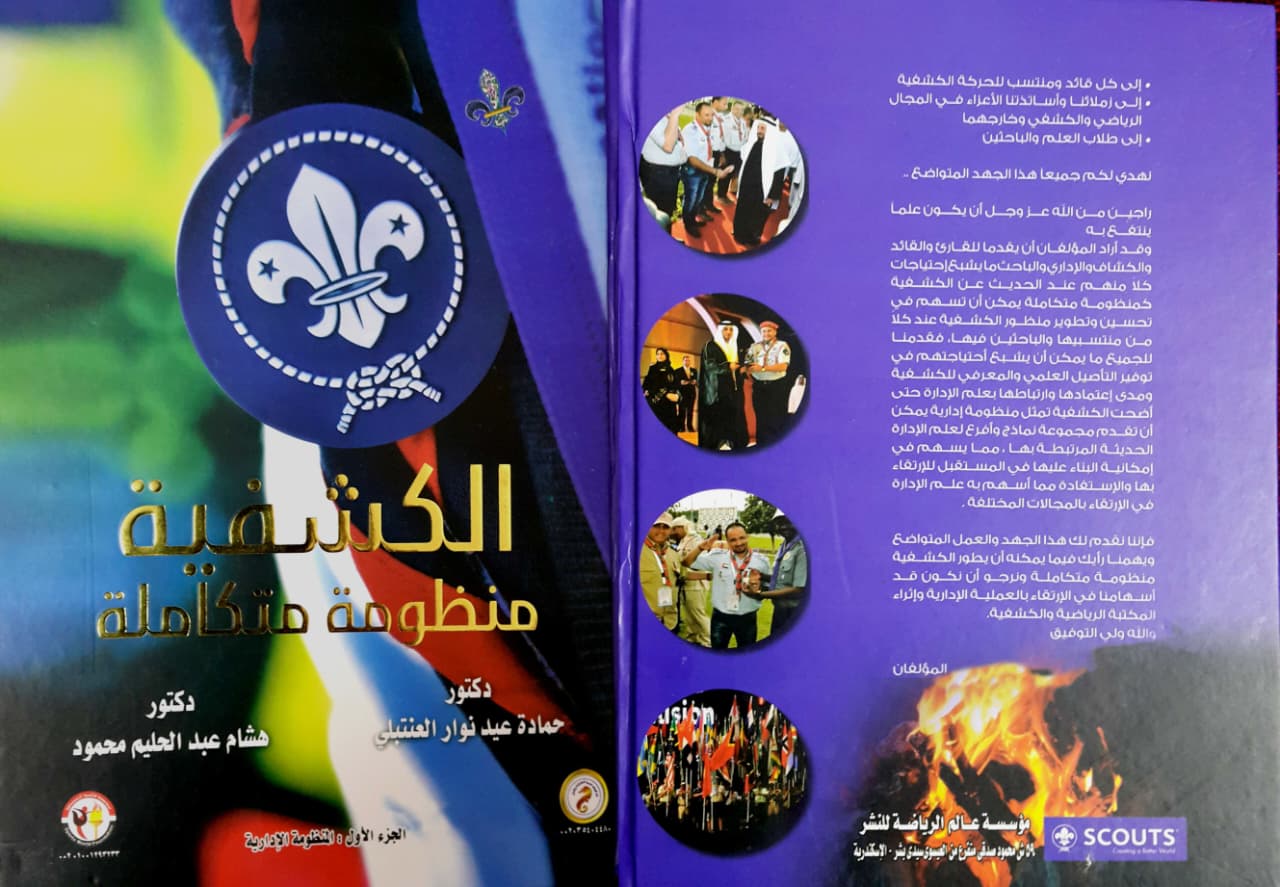
Reviewing the context of the book’s creation, the world was undergoing a transitional phase filled with complex political and economic challenges that forced individuals and institutions to adapt quickly and effectively. Amidst that landscape, the Scouting and Guiding movements emerged as pioneer educational systems preparing individuals from childhood through well-studied, advanced programs and curricula. Their primary objective is to form good citizens capable of achieving balanced growth across behavioral, psychological, and social dimensions. Human society continuously needs young people who prove resilient during times of crisis and change rather than collapsing under pressure. Through ongoing observation of the field reality, a significant gap became apparent: leaders and members performed remarkable work, yet it completely lacked a written and methodological reference linking those practices to modern management sciences, or interpreting Scouting as an integrated administrative system that can be studied, developed, and transmitted across generations.
This volume was designed across nine interconnected and comprehensive chapters. It begins with a broad and exhaustive introduction to Scouting covering its origins, the founder’s biography, global and Arab history, the Scout constitution, core concepts, objectives, principles, age stages, program, Scout method, traditions, and finally, the pivotal role of Scouting in community service and development. The book did not stop at historical foundations; rather, it dove deep into what an average reader might not expect in a scouting book, addressing “Management as a Practical System” which meticulously covers the fundamental management functions: planning, organizing, directing, controlling, and evaluating.
The book also dedicated core chapters to examining the critical areas determining the success or failure of any organization, including: decision-making processes for Scout leaders in terms of concepts, importance, types, principles, steps, and practical applications. The discussion extended to managing Scout meetings equipped with practical templates for meeting minutes and official reports, recognizing that real management relies not on abstract theory, but on documentation and continuous follow-up. Because volunteer work is constantly threatened by collapse if time is wasted, the book detailed time management methodologies for leaders. Furthermore, the book addressed crisis management in Scouting regarding concepts, characteristics, underlying causes, leadership roles, effective confrontation scenarios, communication channels, and necessary emergency plans. Finally, the volume touched upon the administrative development of leaders through sound selection mechanisms, continuous motivation, and administrative training, alongside the role of Scout media and public relations in building effective communication bridges with the surrounding community.
The central and core idea that we intended every reader to take away from this volume is that Scouting is not a recreational activity “less serious” simply because it is voluntary; rather, it should be even more serious and disciplined, because it bears the heaviest responsibility of all: the responsibility of education, human building, and sustainable community service
