


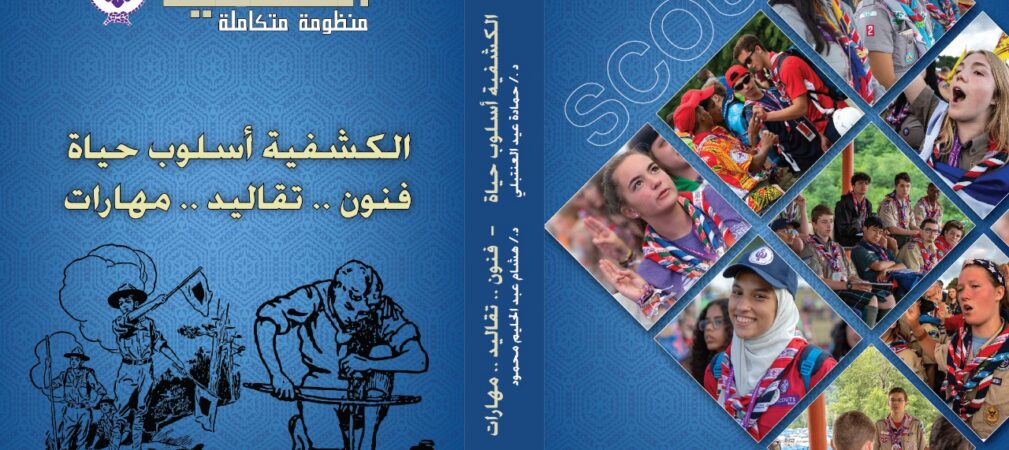
With the passage of years and the accumulation of field experience, it has become abundantly clear that relying solely on administrative and academic presentation is not enough to embody the true and deep meaning of Scouting in all its human and educational dimensions. Scouting in its essence is not studied as pure theory; rather, it is lived dynamically through established traditions, expressive symbols, practical skills, outdoor life, and a distinct culture that leaves a clear, deep imprint on an individual’s behavior and character throughout life. Hence, the second volume, titled “Scouting as a Way of Life: Arts… Traditions… Skills,” was born as a natural and profound extension of the “Scouting: An Integrated System” series. It affirms the firm truth that those who have experienced true Scouting are easily distinguished by their self-discipline, self-reliance under various circumstances, high leadership qualities, superior adaptability to different challenges, and an inherent, sincere desire to serve others and their community.
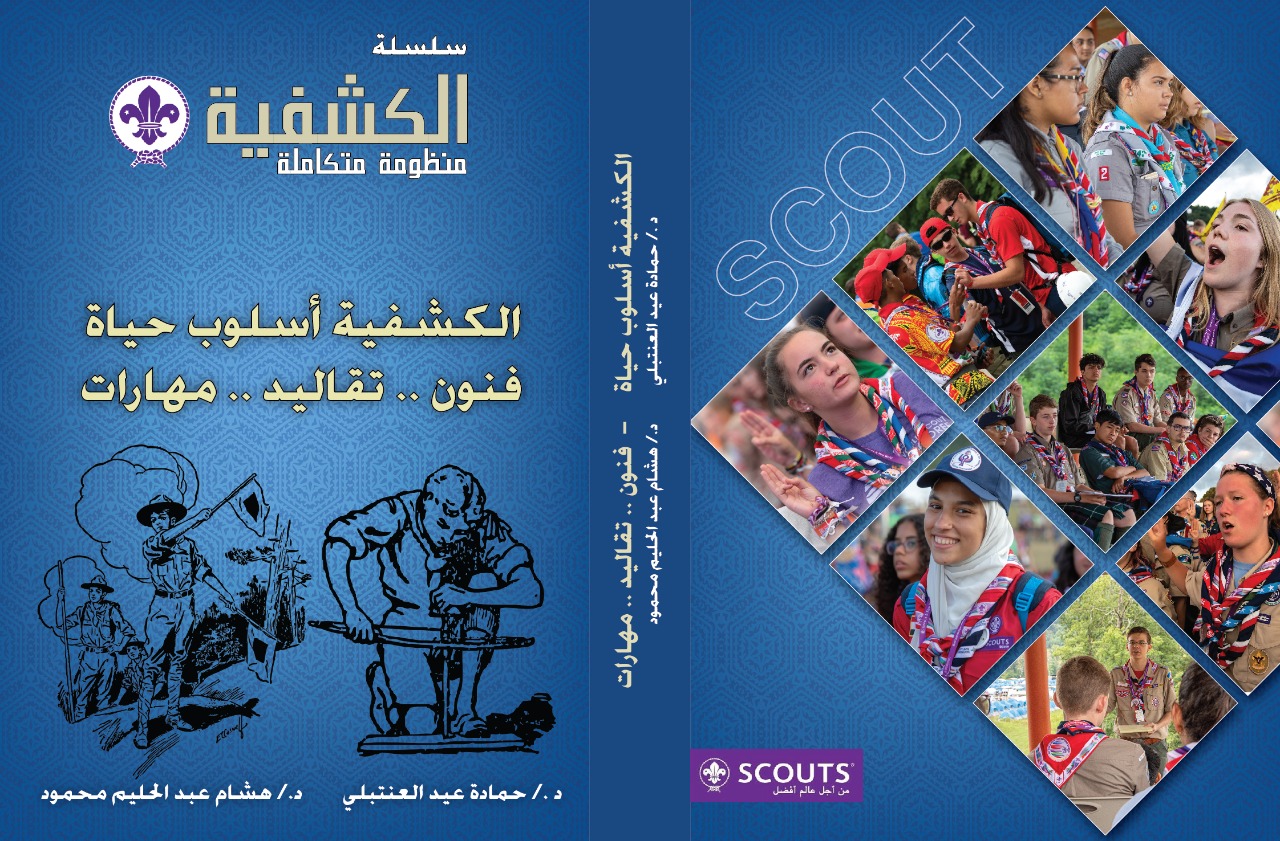
This second volume presents the Scouting movement as an integrated educational pathway extending throughout human life stages. It begins with the child as a young member, progressing through various age groups up to the rover stage, followed by leadership and the training of leader trainers, and extending even to pioneer and veteran stages. This continuous and consistent sequence is the true secret behind Scouting’s deep roots and permanent continuity, far from being a temporary, transient hobby. The book also took care to connect living Scout practices with global Sustainable Development Goals, proving beyond a doubt that contemporary Scouting is expected and required today to demonstrate its close relevance to development projects and active, impactful citizenship within its environment.
This part contains seven chapters rich in living, realistic practice, beginning with “Scout Traditions,” which covers the uniform, ceremonies, gatherings, and high standards of behavior that every scout should learn, absorb, and respect throughout their journey. The book then transitions smoothly into “Arts and Skills of Outdoor Life,” which are indispensable for developing practical and manual capabilities, shaping strong character, and forming the distinct, independent style of a scout. The book also covers the details of “Building and Registering the Scout Troop” as the foundational cell and primary structural unit in the scouting hierarchy at both local and global levels.
The book dwells extensively on the principle of “Volunteering” as the core pillar and beating heart of Scouting, offering a deep analysis of contemporary challenges facing volunteering, such as intense competition among various volunteer organizations, the depletion of energies and leadership, and presenting practical methods to maintain continuity and renew concepts and tools through continuous innovation. It also discusses “Scout Curricula” closely linked to age stages, shedding light on the importance of cooperative learning as an essential and sustainable gateway to lifelong learning. The book does not overlook establishing a “Clear Leadership Development Policy” to ensure the sustainability of Scout work through precise, methodological qualification programs guaranteeing the effective transfer of expertise. Finally, the book addresses the fundamental conditions for organizing and hosting the “World Scout Jamboree,” viewing it as an expressed hope and dream that the day will come when an Arab nation hosts this massive global event with full merit, competence, and wide impact.
These books were written for every leader, member, and official in the Scouting movement, as well as for families and interested individuals, to form a true reference ultimately aiming to bring about a radical change in Arab society’s perception of Scouting—shifting from mere “nice recreational activities” to an integrated educational and administrative movement that genuinely supports national development, strengthens the social fabric, and builds a conscious, responsible leadership generation that masters its work and believes that excellence is a supreme moral and educational responsibility.
